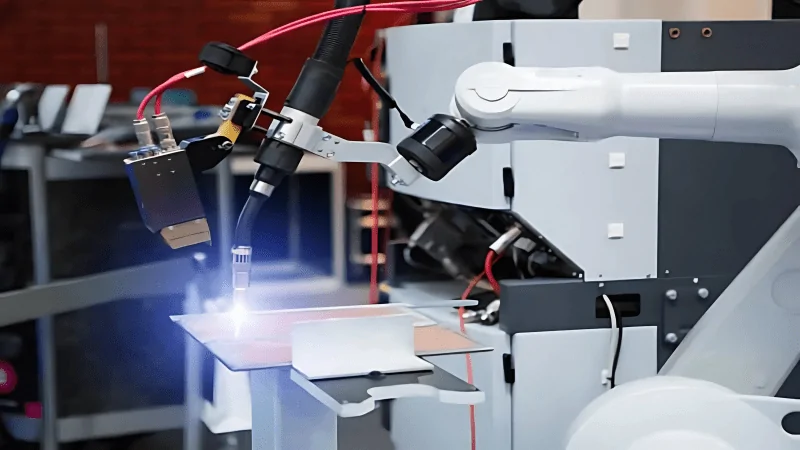
Manufacturing quality has become one of the most important factors determining business success in competitive global markets. Customers, suppliers, and industries now expect products that offer better durability, improved performance, and consistent results across every production cycle. To achieve these standards, manufacturers are continuously adopting advanced technologies that improve accuracy, reduce errors, and strengthen overall production efficiency. Among these advancements, the fiber laser welder has become an important innovation that is helping industries achieve higher levels of quality in modern manufacturing environments.
Quality-focused manufacturing is no longer limited to final product inspections. It begins throughout the entire production process, from material preparation and component assembly to joining techniques and finishing operations. Advanced welding technologies are contributing to this shift by allowing manufacturers to create stronger connections, maintain greater consistency, and reduce production challenges.
As industries continue becoming more demanding, innovation in welding technology is playing a significant role in helping businesses maintain strict production standards while improving productivity and operational reliability.
The Growing Importance of Manufacturing Quality
Quality has always been important in industrial production, but modern markets have raised expectations significantly.
Businesses are competing globally, meaning customers have more choices than ever before. A product that fails to meet quality expectations can affect brand reputation, customer trust, and long-term business growth.
Manufacturers must therefore focus on creating reliable production processes that deliver consistent results.
Achieving this level of quality requires advanced technologies, skilled engineering, and continuous improvement throughout manufacturing operations.
Precision Plays a Major Role in Production Standards
Precision is one of the key elements behind high-quality manufacturing.
Small variations during production can affect product strength, appearance, performance, and durability. This is especially important in industries where components must meet strict engineering requirements.
Modern fabrication technologies help manufacturers maintain greater control over joining processes, reducing inconsistencies that may occur during production.
Improved precision allows businesses to produce components that meet demanding industry standards more effectively.
Reducing Manufacturing Defects
Production defects can create significant challenges for manufacturers.
They increase material waste, require additional labor, delay delivery schedules, and raise operational costs. Preventing defects before they occur is therefore a major priority across industrial sectors.
Advanced welding solutions support manufacturers by providing more controlled and reliable joining processes.
By improving consistency and reducing production variation, these technologies help businesses maintain higher quality levels throughout manufacturing operations.
Supporting Automotive Quality Requirements
The automotive industry depends heavily on manufacturing accuracy.
Modern vehicles include complex structures, lightweight materials, and advanced components that require dependable production methods.
Manufacturers must ensure that every component meets performance and safety expectations before reaching customers.
Advanced welding technologies contribute to automotive production by supporting strong connections, improved accuracy, and consistent manufacturing results.
As vehicle designs continue evolving, quality-focused fabrication will remain essential.
Improving Aerospace Manufacturing Reliability
Aerospace production represents one of the most demanding areas of manufacturing.
Aircraft components must perform under challenging conditions while meeting strict safety and engineering requirements.
Manufacturers require joining methods that provide exceptional reliability and consistency.
Technological innovation in welding helps aerospace companies achieve stronger production control while supporting the development of advanced components.
Higher manufacturing standards contribute directly to improved product reliability and industry confidence.
Enhancing Medical Equipment Production
Medical equipment manufacturing requires exceptional attention to quality.
Products used in healthcare environments must meet strict standards because reliability and precision directly influence their performance.
Manufacturers producing medical devices need fabrication technologies that support clean, accurate, and repeatable production processes.
Advanced joining methods help businesses maintain the consistency required for sensitive medical applications.
Improving Efficiency Alongside Quality
Many manufacturers previously viewed quality improvement and production speed as separate goals.
Modern technology has changed this perspective.
Advanced manufacturing solutions allow businesses to improve accuracy while maintaining efficient production cycles.
Better process control reduces delays, minimizes rework, and supports smoother workflows.
This combination of efficiency and quality provides manufacturers with stronger competitive advantages.
See also: Step-by-Step: From Showflat Visit to Collecting Your New Condo Keys
Supporting Sustainable Production Practices
Quality improvements often contribute to more sustainable manufacturing.
Reducing defects means fewer wasted materials, less energy consumption, and fewer repeated production processes.
Efficient manufacturing methods help businesses achieve environmental goals while maintaining profitability.
Sustainability and quality are becoming increasingly connected as industries search for smarter production approaches.
The Role of Automation in Quality Control
Automation continues transforming manufacturing operations.
Robotic systems, digital monitoring, and intelligent production platforms help manufacturers maintain consistent results throughout large-scale production.
Advanced welding technologies can integrate with automated environments, improving repeatability and reducing human-related variations.
This integration supports higher quality standards while increasing overall production capability.
Future Trends in Manufacturing Quality
The future of manufacturing will focus on greater intelligence, connectivity, and automation.
Industries are moving toward production environments where machines communicate, processes are monitored in real time, and improvements are guided by accurate operational data.
Technologies that support precision and reliability will remain central to this transformation.
Manufacturers that invest in advanced production methods will be better positioned to meet future quality expectations.
Final Thoughts
Higher production standards are becoming essential as industries face increasing competition and more demanding customer expectations. Manufacturers must continuously improve their processes to deliver products that offer reliability, consistency, and long-term value. Advanced welding technologies are supporting this transformation by improving precision, reducing defects, and creating more efficient manufacturing environments.
The continued development of the fiber laser welder represents an important step toward achieving better production quality across multiple industries. By combining advanced engineering, accuracy, automation support, and improved process control, this technology is helping manufacturers build stronger production systems designed for the future.