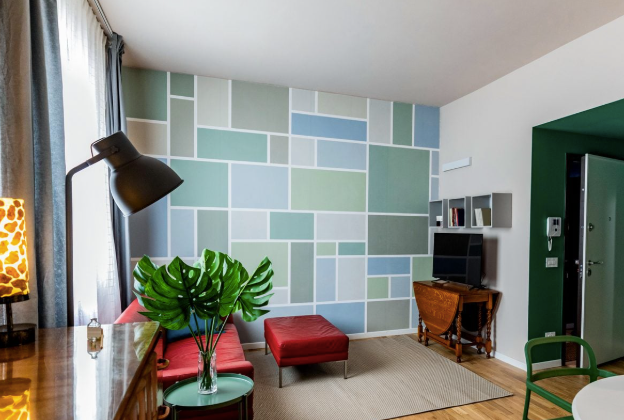
Accent walls gain their impact through deliberate contrast and tactful restraint. A bold hue or rich texture anchors the space, while texture, fabric, or subtle patterns add tactile depth. Color blocking defines zones without clutter, and murals or wallpaper become restrained focal points. Light plays a balancing role, tempering intensity and revealing rhythm in texture. The wall should anchor, not overwhelm, leaving a hint of what comes next for those who keep exploring.
What Makes an Accent Wall Stand Out
An accent wall stands out when it deliberately contrasts with its surroundings in color, texture, or pattern, creating a focal point that anchors a room’s composition. This distinction guides perception, balancing elements across space.
Effective pairing leverages contrast balance and lighting interplay, enabling the wall to anchor mood while remaining visually integrated. Subtle restraint elevates impact without shouting.
Bold Paint Techniques That Do the Talking
Bold paint techniques do more than color walls; they command attention, turning flat surfaces into visual statements.
Bold finishes transform rooms with confidence, guiding mood and rhythm.
Color blocking creates intentional contrasts, delineating zones without furniture clutter.
In a strategic approach, designers use scale, edges, and lighting to maximize impact while preserving balance and freedom of expression.
Texture and Material Play for Visual Depth
Texture and material play introduces tactile drama to walls, leveraging finishes, fibers, and surfaces to create depth that color alone cannot achieve. The approach rewards thoughtful textural contrast and selective material pairing, ensuring pattern alignment supports rhythm rather than chaos. Color saturation remains controlled by finish variety, while light interaction reveals subtle shifts, guiding strategic emphasis without overwhelming.
Slip-Into Murals, Wallpaper, and Architectural Details
Slip-Into Murals, Wallpaper, and Architectural Details pairs strategic visual anchors with restrained execution, inviting focal moments without overwhelming the room. The approach favors freedom-conscious interiors, where slip into murals and wallpaper become deliberate gestures rather than overpowering statements. Texture and material play for visual depth adds tactful dimension, guiding attention while preserving balance. Subtle contrasts empower rooms to breathe and evolve.
Frequently Asked Questions
How Do I Choose the Right Color for My Space?
Choosing the right color hinges on color psychology and color coordination; the space’s mood guides selection. The detached observer notes: test samples, consider lighting, and harmonize with furnishings, ensuring a flexible palette that empowers personal expression and balanced, strategic cohesion.
What Lighting Enhances an Accent Wall Best?
Answering the current question, lighting that enhances an accent wall best uses layering, avoiding glare; it blends accent, ambient, and task layers. Lighting layering and color temperature choices shape mood, drama, and perceived color without constraining creative freedom.
Can Accents Work in Small Rooms or Dark Spaces?
Accents can work in small rooms or dark spaces, the question becomes accent wall feasibility. Creative, strategic choices use light-reflecting finishes and color depth, while dark space strategies exploit contrast, scale, and texture to liberate atmosphere without overwhelming dimensions.
See also: Interoperability: How Blockchains Communicate
Do They Affect Room Resale Value or Mood?
Accent wall resale benefits are nuanced; mood impact depends on palette and lighting. The strategy weighs resale appeal against personal expression, suggesting balanced choices. The approach champions freedom while acknowledging markets notice accent wall resale signals and mood shifts.
What Budget Tips Help Maximize Impact Quickly?
A quick spark resembles a kaleidoscope: budget friendly paint and texture tricks maximize impact swiftly. The strategy favors affordable palettes, sample testing, and layered finishes, enabling creative, freedom-seeking minds to transform spaces without overextending resources.
Conclusion
In the end, an accent wall succeeds when it speaks with intention, not volume. It marks a threshold between rooms and moods, a deliberate pause in color, texture, and light. When chosen with rhythm and restraint, it pulls the eye and steadies the gaze, like a conductor guiding a quiet orchestra through a sweeping crescendo. The wall becomes a hinge, turning space into story, and you into a listener who understands that boldness, well-timed, is simply clarity wearing a vivid name.